
Viking Burial Mounds at Amborneset
Star-shaped graves, a sword of steel and a thousand years of history – at Hindrum Fjordsenter on the Trondheimsfjord.
The Language of Stone – the form and cosmic meaning of the graves
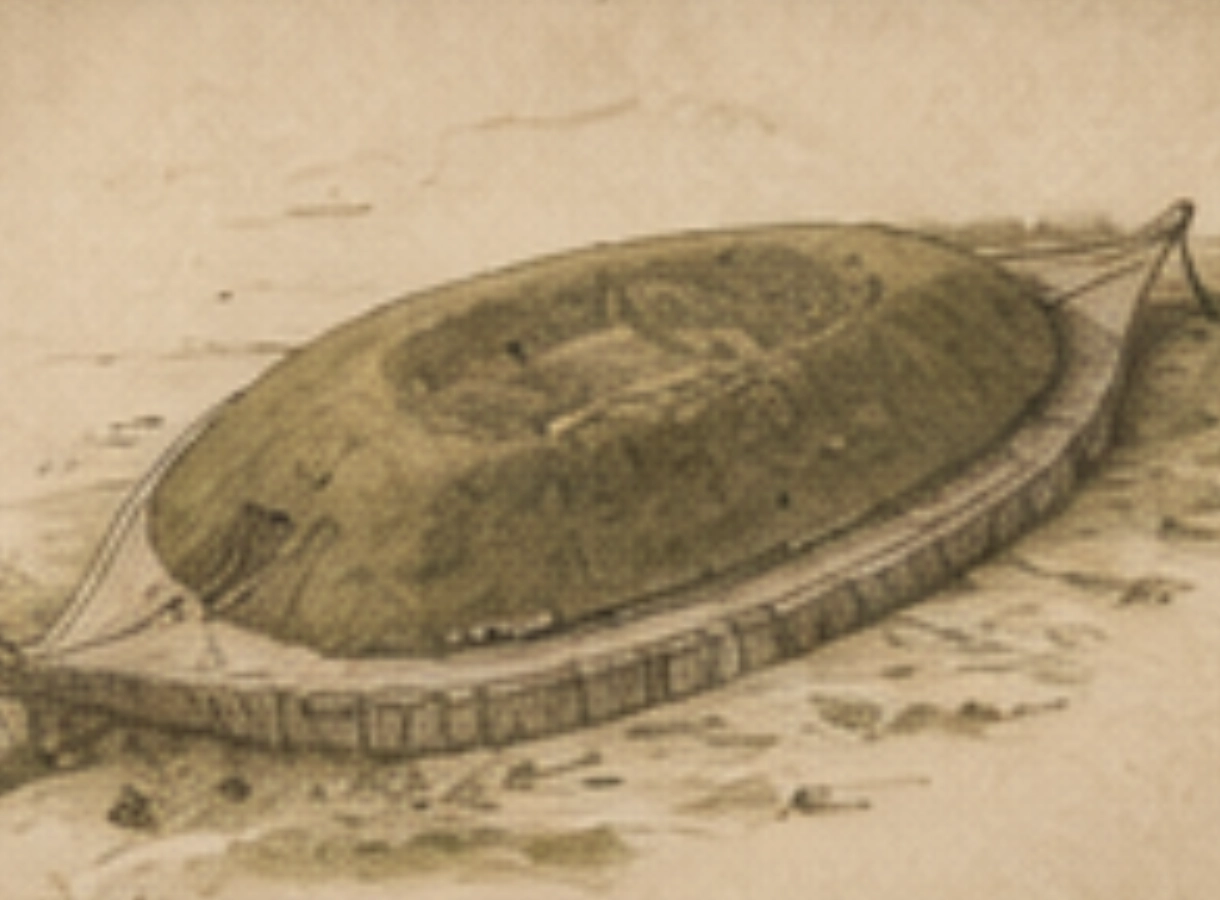
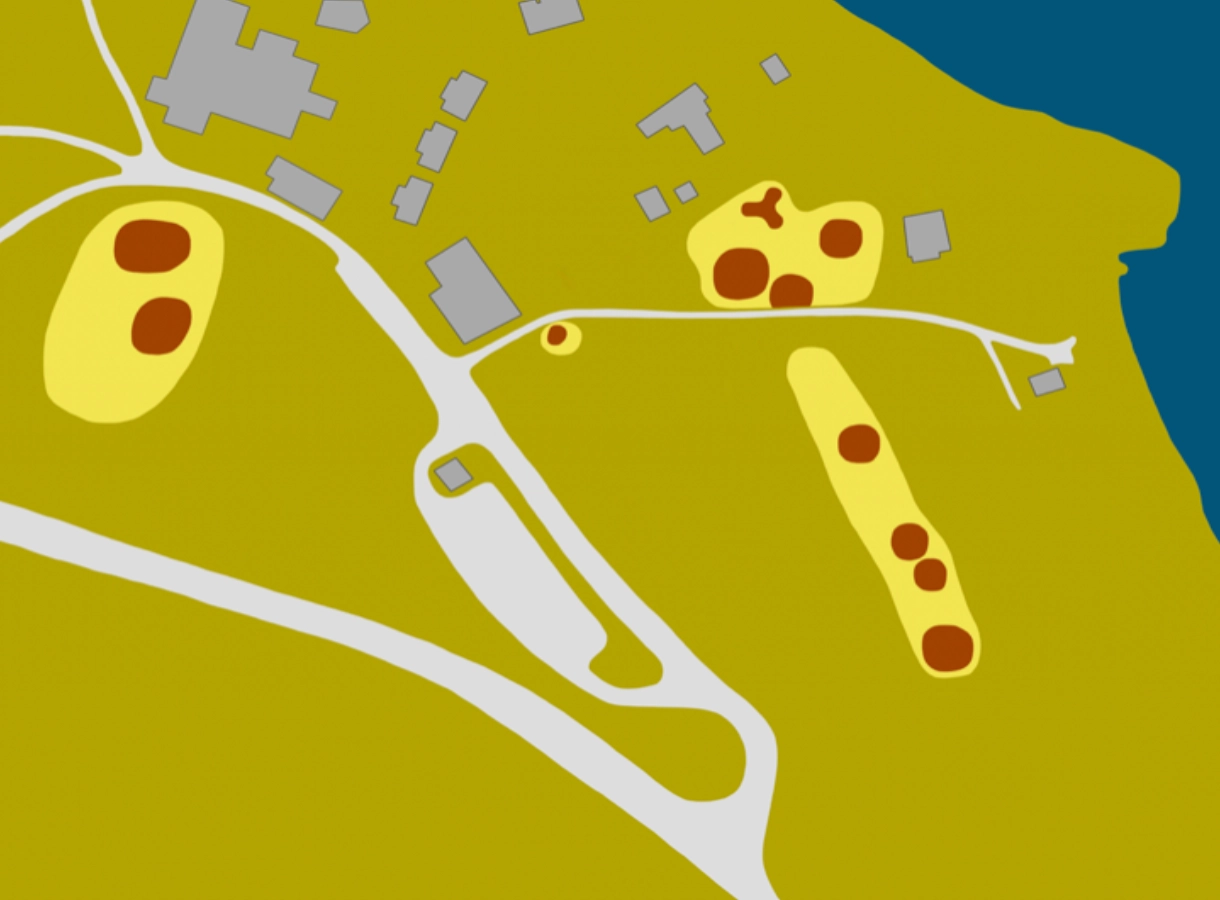
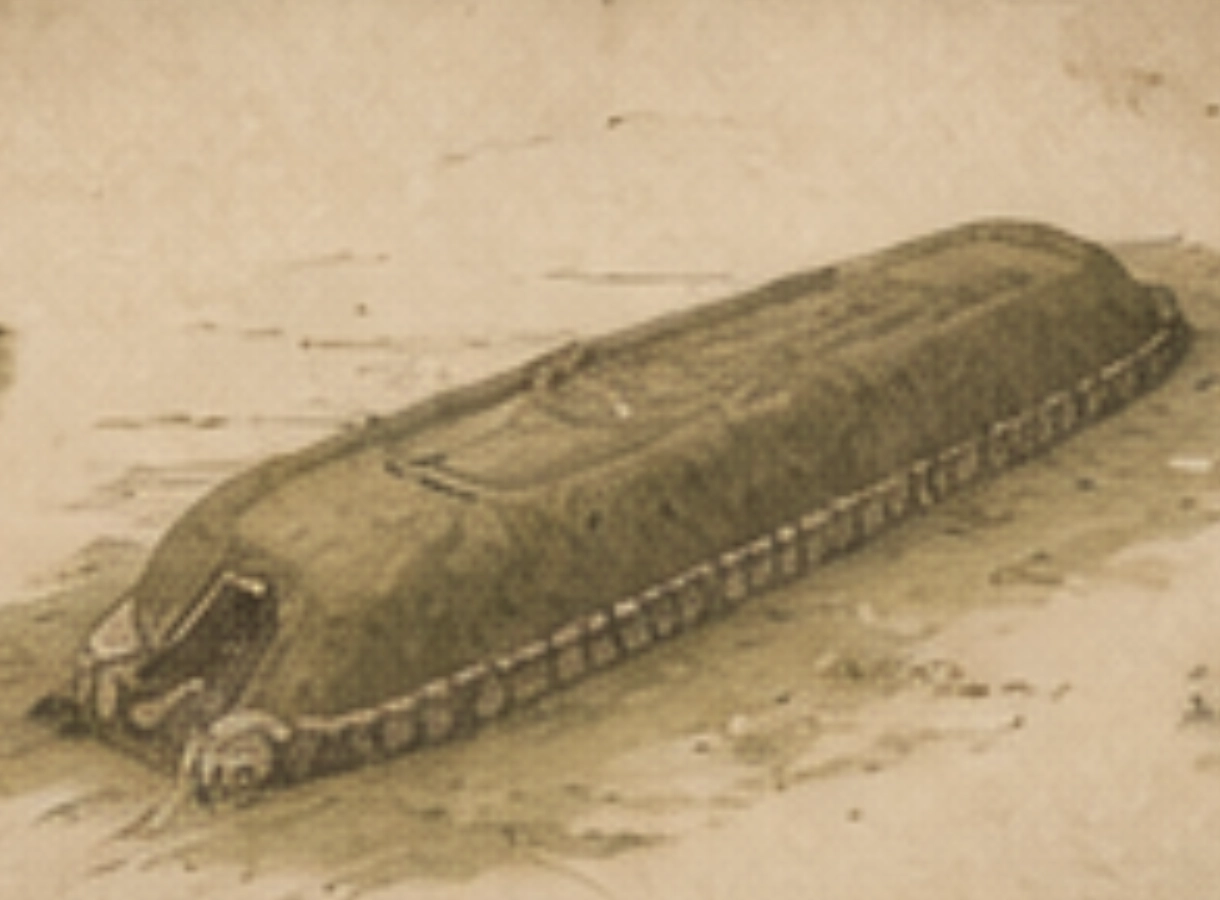
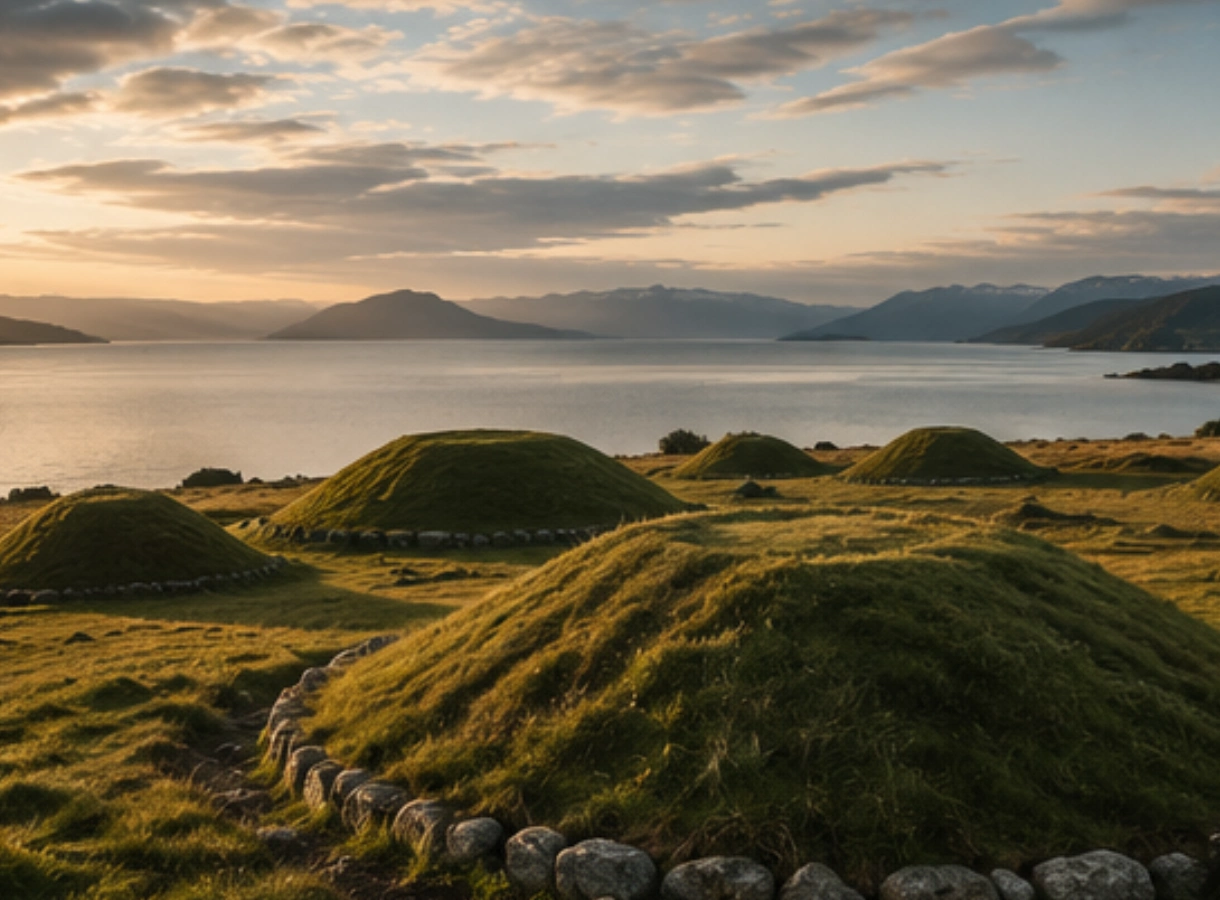
At Amborneset we find burial mounds in almost every form that Viking Age burial custom knew. Round mounds, oval mounds, elongated longmounds and boat-shaped graves – each form chosen with meaning, not by chance. The size of the mound told the story of the person who lay within. A small mound of one and a half metres in diameter may have belonged to a farmer or craftsman. The largest burial mounds in Norway, such as Herlandshaugen on the island of Leka with its 65-metre diameter and 12-metre height, belonged to the most powerful. Status was not only lived – it was built into the earth for eternity.
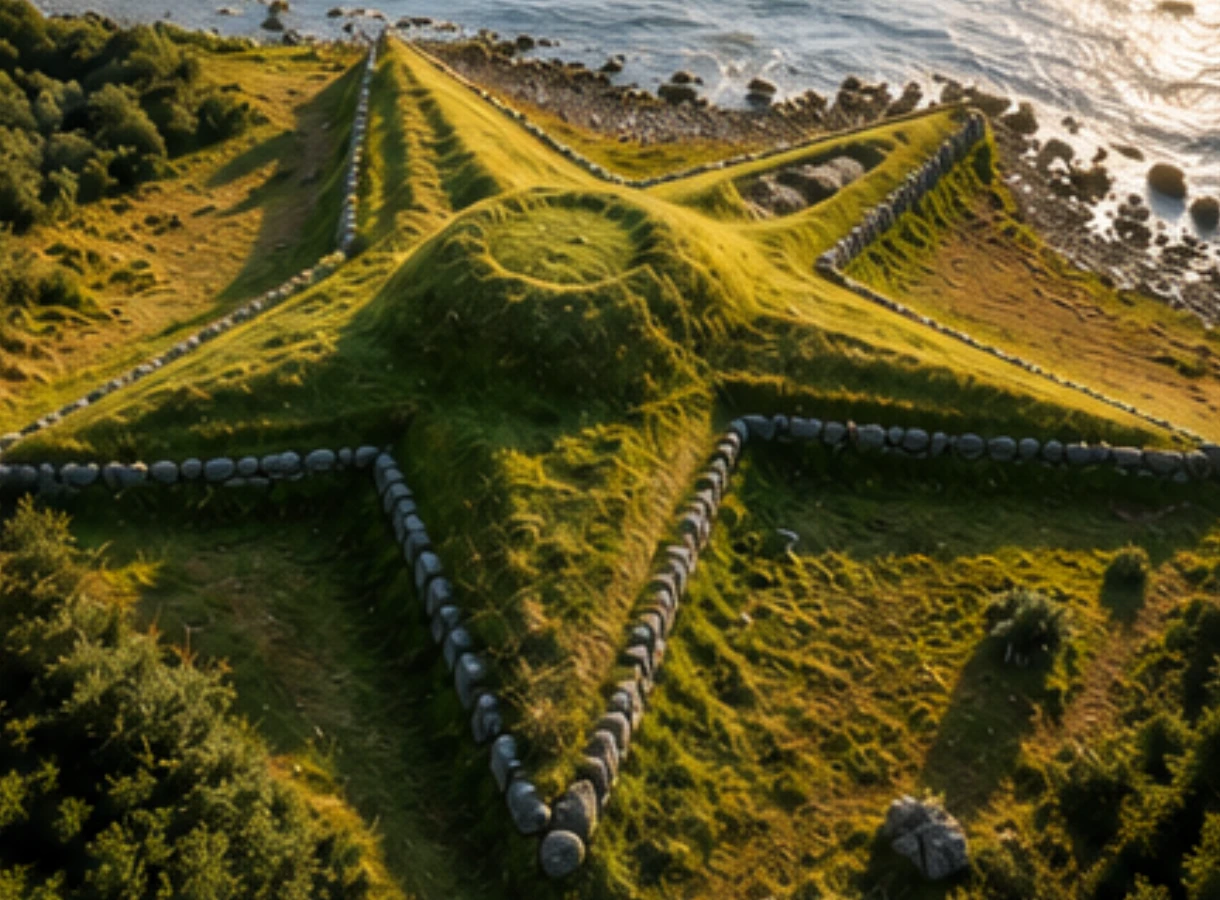
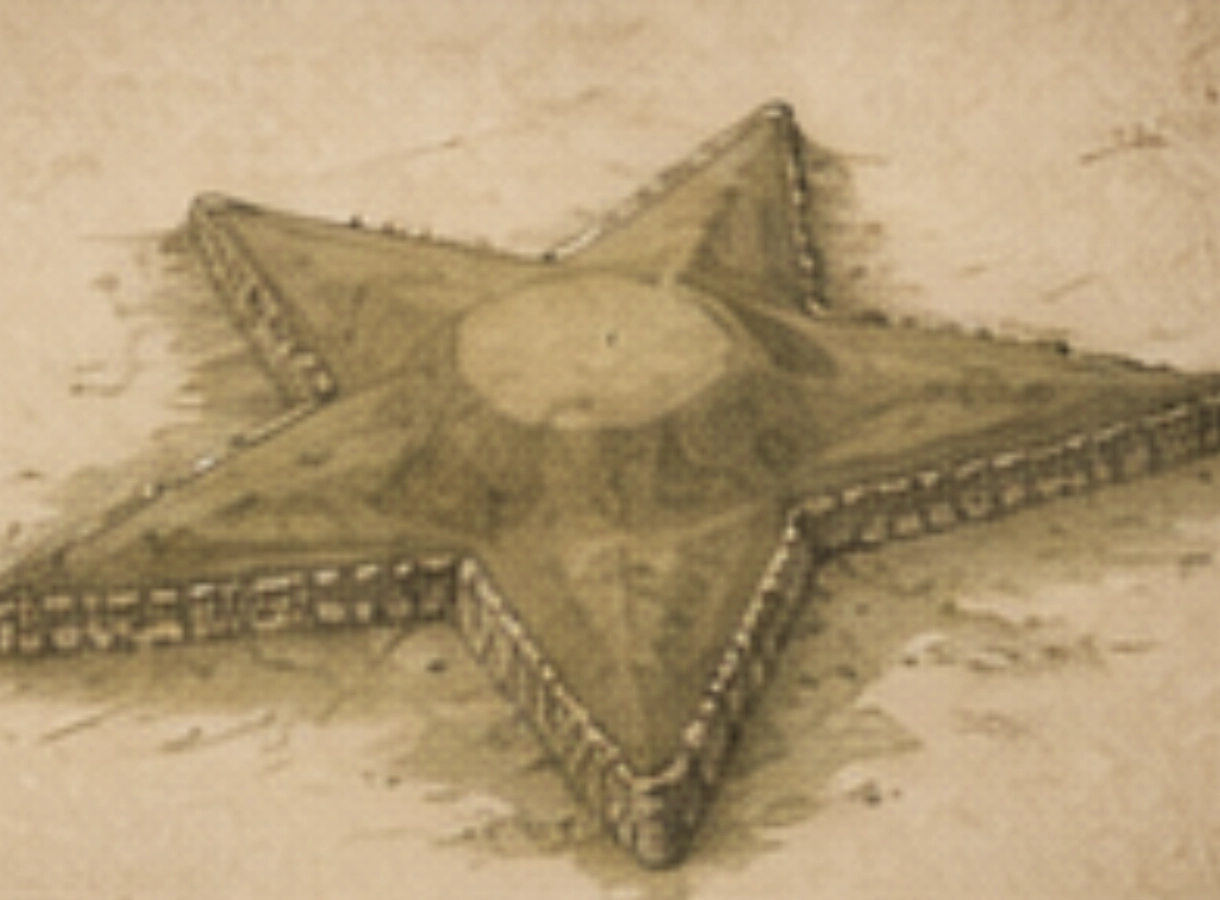
Near the shore, on the lower part of Amborneset, lies a grave unlike any other. It is star-shaped – a triangular, three-armed burial type found almost nowhere else in Norway. The shape is not decorative. In Norse mythology and shamanistic tradition, the triangle is linked to Yggdrasil, the world tree that bound the nine realms together – Asgard above, Midgard in the middle and Hel below. The person laid to rest in such a grave was placed not merely in the earth, but within a cosmic order. The grave was not an endpoint. It was a junction.
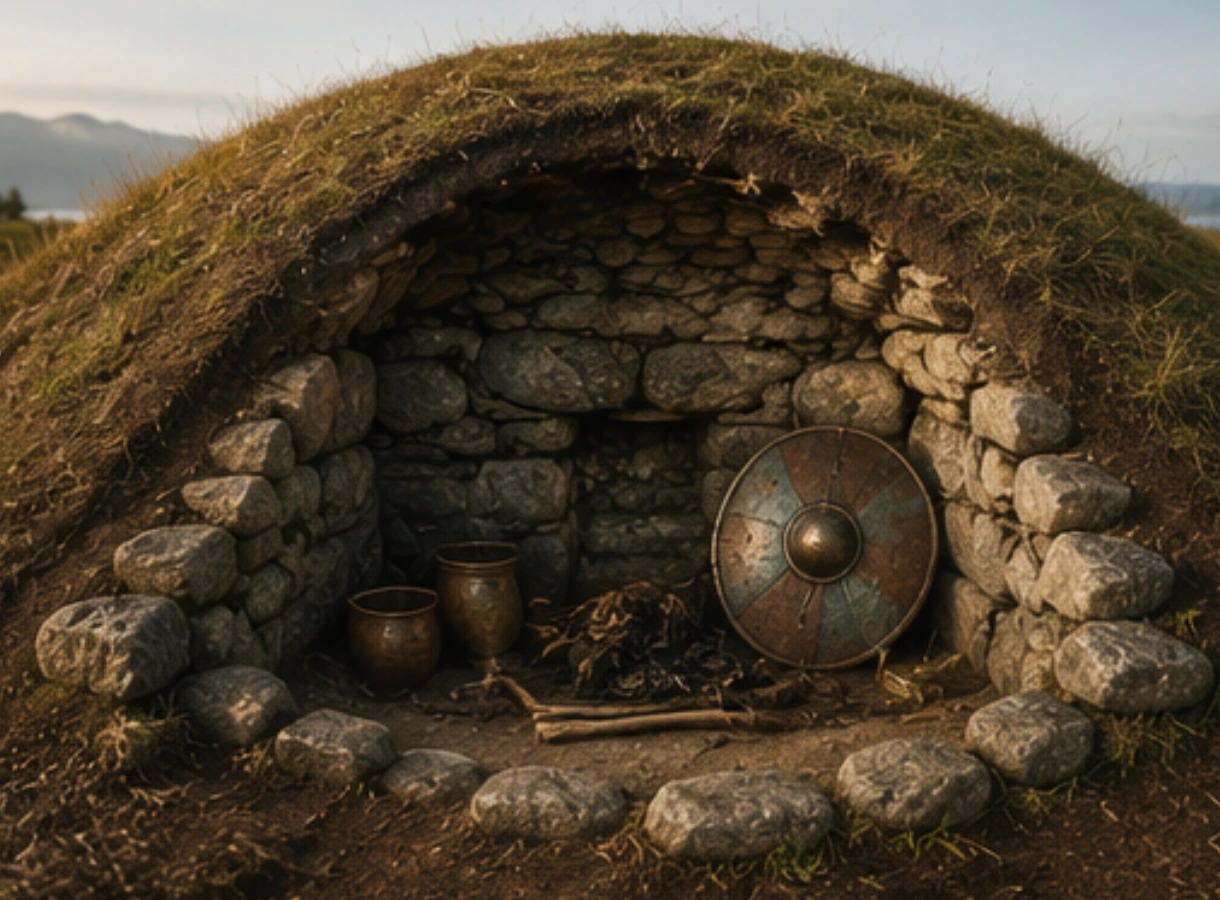
At the core of every burial mound, hidden beneath layers of earth and time, lie stone cairns. This is where the grave itself is located – the deceased either cremated or laid whole in the chamber, surrounded by objects meant to accompany them further. Tools, jewellery, food and weapons. Not symbols, but practical provisions for the life the Vikings believed awaited on the other side.
From Eighty to Thirteen – the silent catastrophe of the modern age
In the nineteenth century, more than eighty burial mounds were counted in the area around Amborneset. Today thirteen remain. The other sixty-seven are gone – not dramatically destroyed, but quietly removed by plough, spade and foundation work across generations. What survived a thousand years of northern Norwegian weather, civil war and medieval chaos was reduced to nothing by modern agriculture and development. It is perhaps the most silent catastrophe in the area's history.
The surviving mounds carry their own scars. Distinct foot ditches along the lower edges mark the original contours – boundaries that once defined the sacred from the everyday. Plundering pits scar several mounds like dark wounds in the terrain, evidence of hands that, in desperation or greed, broke into what belonged to the dead. Perhaps they searched for gold, perhaps weapons, perhaps amulets meant to protect the warrior on the journey to Valhalla. They found no peace – and they left behind traces that archaeologists read as open books today.
The Iron Song from Amborneset – the sword that survived a thousand years
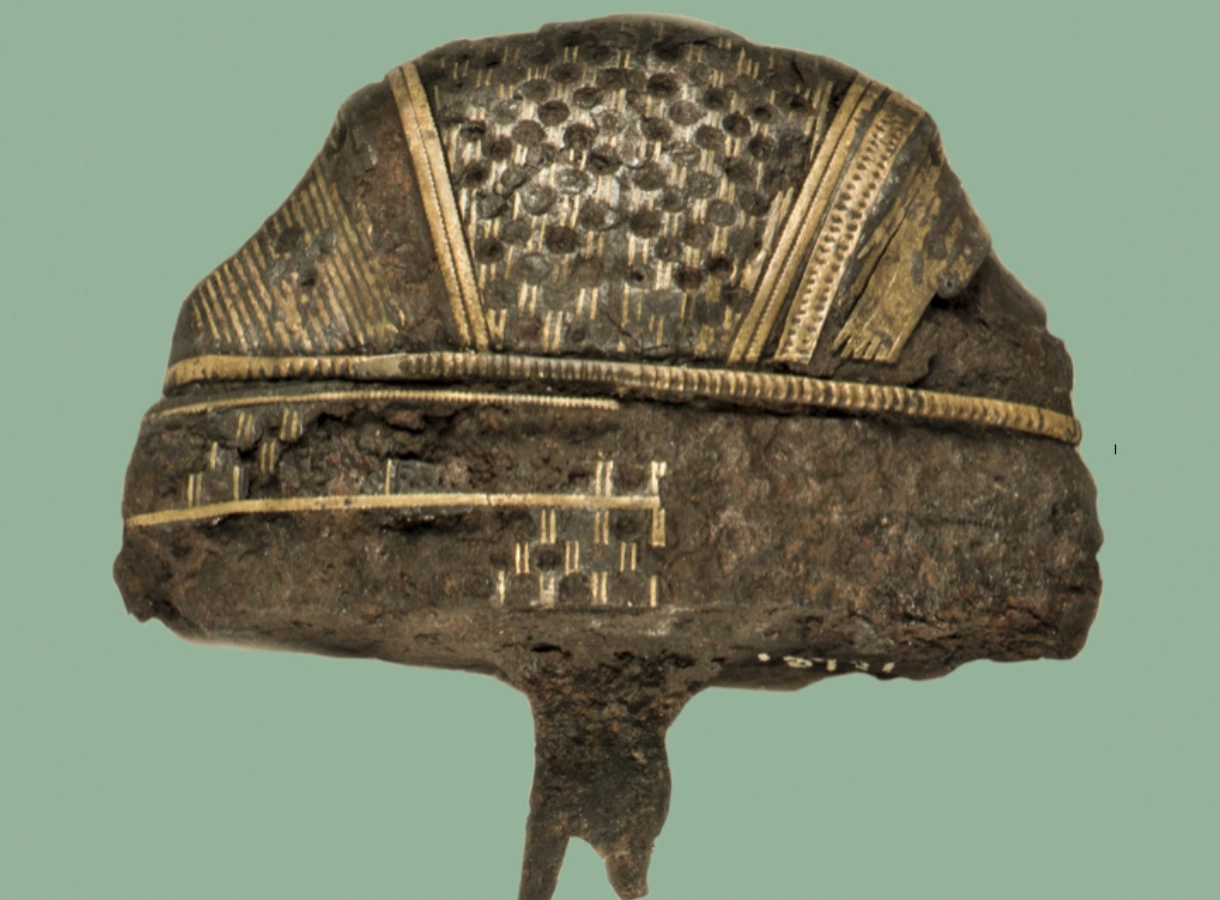
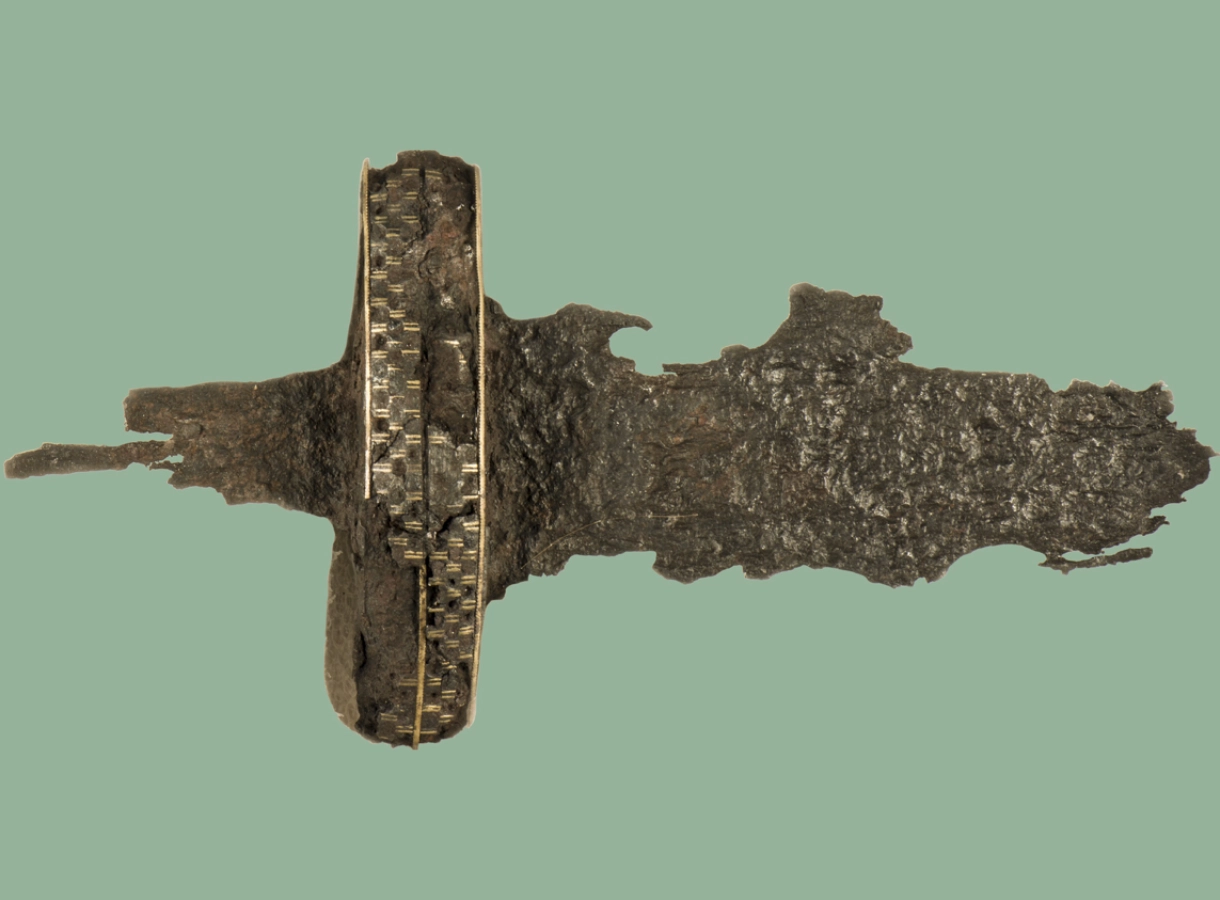
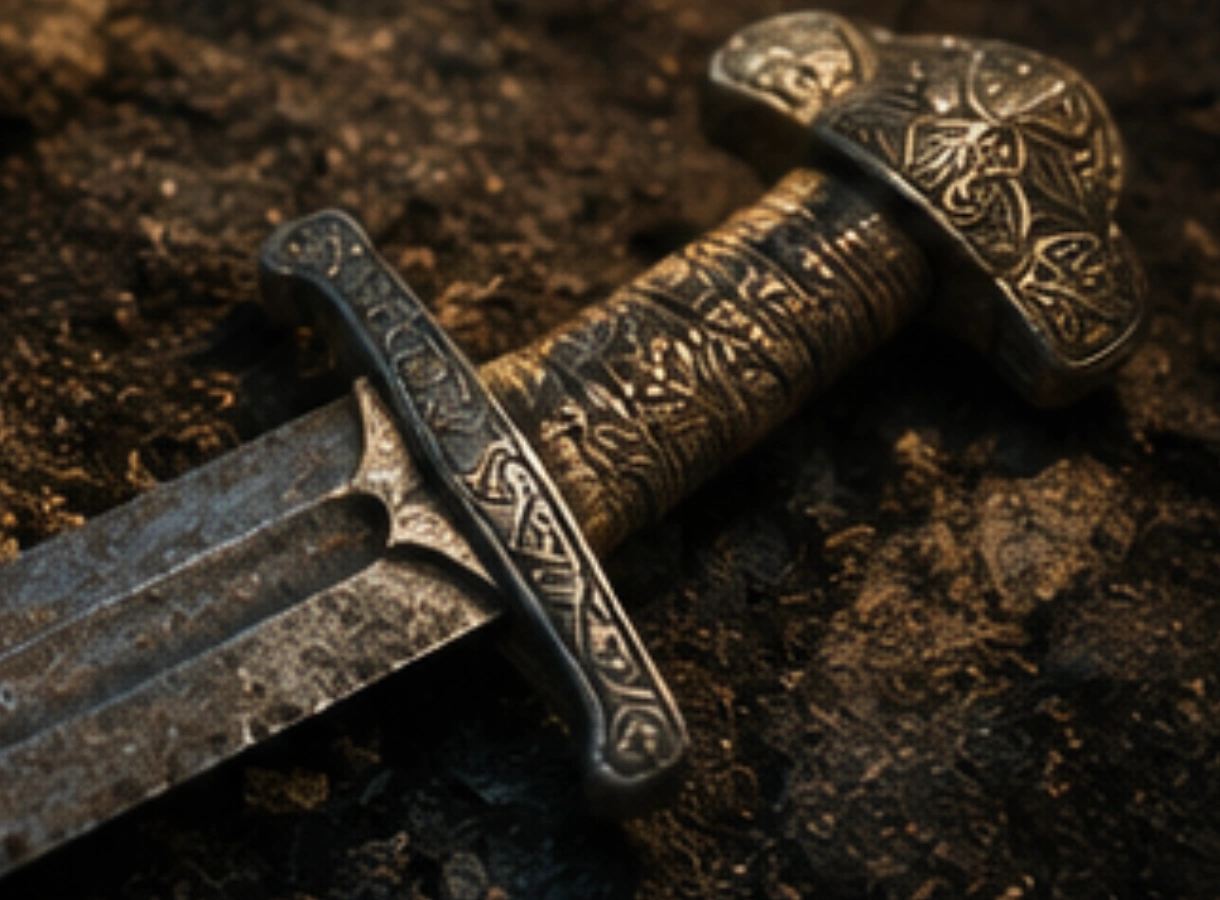
In 1928, fragments of a Viking sword were delivered to the Science Museum in Trondheim, retrieved from one of the burial mounds at Amborneset. The dating points to the period 800–850 AD – the first, darkest decades of the Viking Age, when Scandinavian warriors began leaving their mark along the coasts of Europe. The sword type is classified as J. Petersen type E, after archaeologist Dr. Jan Petersen, who in 1919 published the first systematic typology of Norwegian Viking swords in his doctoral dissertation «De norske vikingsverdene».
The craftsmanship of this sword is remarkable. The grip includes part of the blade of a single-edged sword. Both guards are well preserved and decorated with work that speaks of a smith with time, patience and pride – narrow, double copper strips that frame round recesses vertically along the full length of the guard. The three-part pommel is forged together with the upper guard and separated from it by a surrounding beaded border. This is not a mass-produced instrument of war. It is a personal object, made for one man, intended to outlast him.
Norway is the Viking world's foremost armoury. Of approximately 3,500 Viking swords found across all of Scandinavia, most originate from Norwegian soil. The explanation is both simple and profound: the pagan burial custom of placing swords in graves was stronger and more widespread in Norway than in Sweden or Denmark. The sword followed its owner into death, just as it had followed him in life – as an extension of will, status and honour. The Amborneset sword is one of these. A fragment of a man we will never know, but whose craftsmanship we can still hold.
The Earth's Secrets – archaeologists open the door to the Iron Age
In 2009, archaeologists from NTNU's Science Museum in Trondheim carried out systematic investigations at Amborneset, in connection with the establishment of a rest area. What they found changed the understanding of the site. Among the discoveries were numerous cooking pits from the Iron Age – structures used for food preparation using heated stones. Some of the cooking pits had impressive dimensions of over two metres in diameter. Such sizes are not used to cook dinner for a family. They are used to feed many – at gatherings, ceremonies and celebrations where an entire community came together.
The archaeologists found three hearths and traces of a layer of black soil – the darkest sign of prolonged human activity. Black soil forms where people have lived over time: fire, ash, organic matter and generations of daily life merge into a layer that archaeologists recognise immediately. No clear postholes revealed houses, but the presence of hearths, black soil and the surrounding burial mounds points clearly to settlement nearby. People lived here. Not only buried their dead here.
On Borgåsen, just above Amborneset, lies a collection of stones that local tradition has called Borgen – the Fortress. It is thought this may have been a village fort – a defensive post or meeting place for local power. Below it lie cairns that may be burial mounds or outposts connected to the same complex. The combination of a burial field, cooking pits, hearths, black soil and a possible hillfort points to Hindrum as a historical centre of gravity in Indre Fosen – a place of lasting power, not merely passing settlement. Read more about the Iron Age fortress . What still lies hidden beneath the surface, no one knows.
The fjord beyond Amborneset remembers more than graves. On 18 June 1199, those same waters became a battlefield – where King Sverre and the Birkebeiner met the Baglers' fleet in one of the civil war's most decisive sea battles. Five ships sank. Who knows what still lies on the bottom beyond the headland.
Explore more heritage sites, local places and historical traces on the Fosen peninsula. Back to culture, food and places .